



How to Help Your Teen Build a Resume With No Work Experience: A Guide for Families
A first resume can feel impossible to write. How do you fill a page when your teen hasn't had a job yet? The truth is, most teens have more to share than they think. School projects, volunteering, chores, clubs, and hobbies all show real skills that employers value.
This guide walks families through building a first resume for a teen or young adult with a disability, step by step. It works for job seekers in Miami-Dade and across Florida, whether they're looking for a summer job, a part-time role, or their first job after high school.
How to Help Your Teen Build a Resume With No Work Experience: A Guide for Families
Why a resume matters, even for a first job
Step 1: Make a list of everything your teen has done
Step 2: Turn experiences into skills
Step 3: Use a simple resume layout
Step 4: Write strong, simple bullet points
Step 5: Keep disability information off the resume
Step 6: Review, practice, and update
Why a resume matters, even for a first job
Many first jobs ask for a resume, even simple ones. A resume:
Shows employers what your teen can do
Helps your teen practice talking about their strengths
Makes applications faster and easier
Builds confidence before an interview
Writing it together is also a great chance to talk about goals, interests, and the kind of work your teen might enjoy.
Step 1: Make a list of everything your teen has done
Start with a brainstorm. Write down anything that shows responsibility, effort, or skill:
School classes they enjoy or do well in
Group projects or presentations
Volunteering at church, school, or community events
Clubs, sports, or teams
Helping family members or neighbors, like pet sitting or yard work
Regular chores at home
Hobbies, like art, gaming, music, or building things
Programs, camps, or trainings they've completed
Nothing is too small for the brainstorm. You'll choose the best items later.
Step 2: Turn experiences into skills
Next, connect each experience to a skill an employer would care about.
Feeding the family pet every day → responsible and reliable
Organizing a closet or shelf → organized and detail-oriented
Playing on a team → teamwork
Helping at a school event → customer service and communication
Building computers or editing videos → technical skills
Employers value these "soft skills" highly. Our post on the hidden power of soft skills explains why.
Step 3: Use a simple resume layout
Keep it to one page, with clear headings and plenty of white space. Here's a simple template:
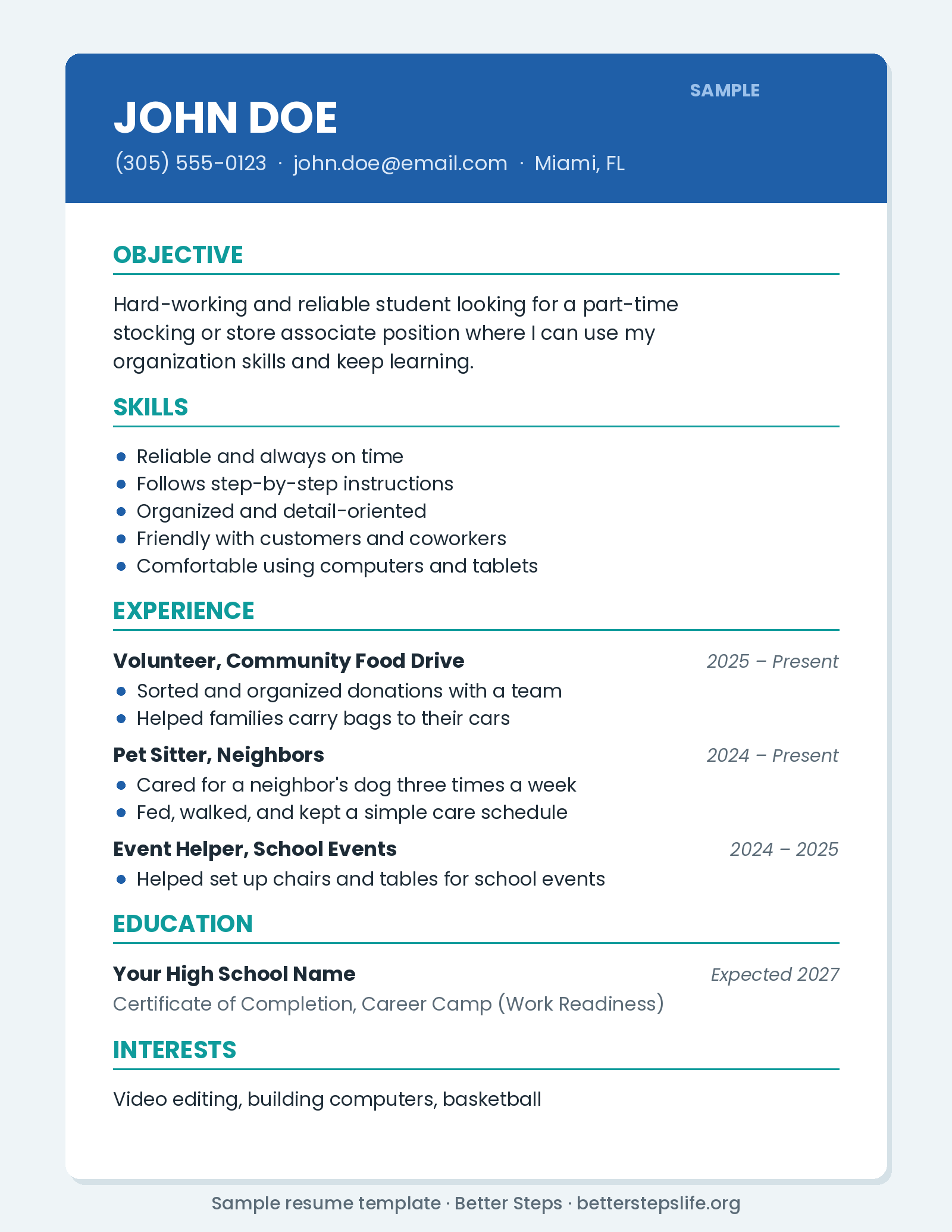
Name
Phone · Email · City, Florida
Objective
One sentence about the job your teen wants, like: "Hard-working student looking for a part-time stocking position where I can use my organization skills."
Skills
3 to 6 short bullet points, like "Reliable and on time," "Follows step-by-step instructions," or "Comfortable with computers."
Experience
Volunteering, school projects, or helping roles, with one or two bullets each.
Education
School name, grade or expected graduation year, and any certificates.
Interests (optional)
A few hobbies that show personality or skills.
Want a head start? Get our editable resume template in Google Docs
Step 4: Write strong, simple bullet points
Start each bullet with an action word and keep it short:
"Helped set up chairs and tables for school events"
"Sorted and organized donations at a community food drive"
"Cared for a neighbor's dog three times a week"
Avoid long sentences. Short, clear bullets are easier for employers to read.
Step 5: Keep disability information off the resume
A resume is about skills and experience. Your teen doesn't need to mention a disability on a resume, and it's their choice when, or whether, to share it later. Learn more in our guide on what employers can and can't ask about a disability.
Step 6: Review, practice, and update
Proofread together. Read it out loud to catch mistakes.
Get a second opinion. Ask a teacher, mentor, or family friend to review it.
Practice talking about it. Your teen should be able to explain each item in their own words. That's great interview practice, and our interview preparation guide can help.
Update it often. Add new experiences as they happen.

Ways to build experience for the next resume
If the resume feels thin, that's okay. Here are easy ways to add to it over time:
Volunteer at a local library, animal shelter, or community event
Join a school club or team
Take on a regular responsibility at home or for a neighbor
Try job shadowing to explore different kinds of work
Looking ahead? Our posts on what happens after high school and navigating a first job share more ideas.
Frequently asked questions
Can a teen get a job with no experience? Yes. Many first jobs are designed for beginners. A clear resume that highlights skills and reliability helps.
Should I include references? It's fine to write "References available upon request." Have two or three ready, like a teacher or volunteer leader.
How long should a first resume be? One page is perfect.
How Better Steps can help
At Better Steps, we help children, teens, and adults with disabilities across Florida build skills for work and life. Learn more on our Services page.
Have questions? Contact our team.
Keep learning with us: Find more guides on the Better Steps blog, and follow us on Instagram, Facebook, and LinkedIn for weekly work and life skills tips.