



Preparing for Your First Job Interview With Disability: A Strategic Guide to Disclosure and Presentation
Your resume is strong. Your skills are real. You're qualified for the job. But as you prepare for the interview, anxiety creeps in: Should I tell them about my disability? When should I disclose? What exactly do I say? What if they don't hire me because of it? Will they ask illegal questions? Do I need accommodations for the interview itself?
These questions are legitimate, and you're not alone in asking them. Virtually every person with a disability faces the interview disclosure question. Whether you have autism, ADHD, a learning disability, physical disability, mental health condition, or any other disability, the "to disclose or not" question looms large.
Here's what we know from working with hundreds of job seekers at Better Steps Life Skills Center in Florida: How you handle disclosure—strategically and thoughtfully—often determines whether you get the job. We've seen talented people with disabilities get job offers because they disclosed strategically and presented themselves with confidence. We've also seen equally qualified people lose opportunities because they mishandled disclosure or didn't present themselves effectively.
The difference isn't about the disability. It's about preparation, strategy, understanding your rights, and knowing what to say.
This guide walks you through everything you need to know about interviewing with a disability: the disclosure decision and timing, what to say (and what not to say), how to request accommodations, how to demonstrate capability, how to manage anxiety, and how to present yourself as a confident, qualified candidate.
The Disclosure Dilemma: To Disclose or Not
Let's start with the central question that keeps you up at night: Should you tell the employer about your disability?
The honest answer is: It depends. But let's understand what influences this decision, because getting it right is crucial.
What Disclosure Actually Means
First, clarify what disclosure is. Disclosure means telling the employer about your disability and potentially about accommodations or support you might need. It does NOT mean:
Explaining your entire medical history
Sharing personal trauma or struggles
Proving your disability
Listing all your limitations
Oversharing about symptoms or challenges
Disclosure simply means being honest: "I have [disability]" and potentially "I need [specific accommodation] to work my best."
Why Disclosure Matters
Here's the legal reality: Under the Americans with Disabilities Act (ADA), employers cannot legally discriminate against qualified candidates because of disability. However, to access accommodations or protections under the ADA, the employer typically needs to know you have a disability. You can't get accommodations you haven't disclosed.
Additionally, if you have a disability that requires accommodations (modified schedule, sensory considerations, breaks, assistive technology, communication style adjustments, etc.), not disclosing creates problems. You either struggle without necessary support, or you struggle trying to hide your needs, or you later have to disclose anyway—which looks worse.
Most people worry: "If I tell them I have a disability, they won't hire me."
This fear is understandable. Discrimination exists. Bias exists. But here's what research shows: You're more likely to fail without necessary accommodations than to be rejected for disclosing thoughtfully. And many employers are more flexible than you expect, especially if you frame accommodations as reasonable solutions.
The Strategic Disclosure Decision
Disclose if:
You need accommodations to perform the job (modified schedule, breaks, quiet space, assistive technology, communication modifications, etc.)
Your disability is visible (in which case disclosure acknowledges the reality)
You have employment gaps you need to explain (time in treatment, transition services, etc.)
You're concerned about managing without accommodations
The job requires disclosure for safety or legal reasons
You'll need reasonable accommodations to succeed and thrive
Consider carefully before disclosing if:
Your disability is completely invisible and genuinely doesn't affect job performance
You don't need any accommodations
You're completely independent in your work abilities
The disability isn't related to the job in any way
The job is in an industry known for severe disability bias
The reality for most job seekers with disabilities: Strategic disclosure before or during the interview, handled confidently, is more likely to result in employment than either avoiding disclosure entirely (and struggling without support) or disclosing poorly (with shame, oversharing, or defensive language).
When to Disclose: Timing Strategies
Once you've decided to disclose, the next strategic question is: When?
Option 1: During the Interview (Most Common and Strategic)
Most successful disclosures happen during the interview. This approach allows you to:
Present your qualifications and value first (establishing you're capable)
Assess the employer's receptiveness and potential bias
Frame disclosure positively and confidently
Explain how you'll handle accommodations in context
Control the narrative rather than leaving it to assumptions
The best timing within the interview:
Early (first 5-10 minutes)if your disability is visible or obviously will become apparent
Mid-interview (when relevant)if you're answering questions about experience or addressing an employment gap
Toward the end if you're discussing specific accommodations you'll need
Real example: If asked about a gap in your work history, you might say: "I took time after high school to receive transition services and work-based learning training, which actually helped me develop workplace skills and clarify career goals. That preparation is why I'm confident in my abilities for this role."
Option 2: When You Need Interview Accommodations
If you need accommodations for the interview itself (extra time, written questions, quiet space, short breaks, etc.), you MUST request them before or at the very start of the interview. This is legitimate and protected under the ADA.
How to request: "I work best with [specific accommodation]. For example, I focus better with written instructions or in a quieter environment. Would that be possible for our interview?"
Option 3: After Hiring/Before Start Date
Sometimes it's strategic to wait until you're hired to discuss specific accommodations. This works if:
You don't need accommodations for the interview itself
Your disability doesn't affect interview performance
You want to establish yourself as qualified before discussing accommodations
You plan to discuss accommodations during onboarding
The advantage: You're hired before discussing disability. The disadvantage: You must address accommodations immediately, and it could feel deceptive if you wait too long.
Option 4: Before You Apply
In rare cases, you might disclose before applying:
Through disability-specific hiring initiatives
When applying through disability employment organizations
For jobs with organizations serving people with disabilities
Avoid: Disclosing on your resume or in your cover letter. These platforms don't allow you to explain context and frame disclosure positively.
What to Say: Scripts and Language That Works
What actually comes out of your mouth matters tremendously. Here are proven scripts for different scenarios:
Script 1: Simple, Straightforward Disclosure (Works for Most Situations)
"I want to be upfront with you. I have [disability]. It doesn't affect my ability to do this job. I've worked successfully in similar roles with [specific accommodation or independently]. I'm committed to doing excellent work here."
Why this works:
Direct and honest
Immediately states it won't affect job performance
Provides evidence (your work history)
Confident, matter-of-fact tone
Script 2: Reframing Disability as Neutral/Irrelevant (When Appropriate)
"I have [disability], but I've developed strategies to work effectively. In my previous role [specific example], I completed [task], which demonstrates [relevant skill]. I'm excited to bring that capability to this position."
Why this works:
Acknowledges disability without making it the focus
Pivots quickly to capability and concrete evidence
Shows you've handled similar situations successfully
Script 3: Addressing Employment Gaps Due to Services
"I participated in a transition program that included work-based learning and life skills development. That hands-on training gave me real workplace experience and helped me develop essential employment skills. I'm now ready to apply those skills in a competitive job."
Why this works:
Frames the gap as preparation, not failure
Explains what you gained from the time
Shows you're ready now
Script 4: Requesting Accommodations You'll Need
"I've found that [specific accommodation] helps me do my best work. In my previous role, I used [accommodation], and it allowed me to [specific outcome]. I'd want something similar here. How does your organization typically handle that?"
Why this works:
Links accommodation to successful outcome
Shows it's worked before with other employers
Frames as collaborative process
Specific and concrete
Script 5: Responding to Employer Concerns
If an interviewer expresses concern about your disability:
"I understand the concern. However, I've successfully [provide concrete example]. Here's how I approach that: [explain your strategy or accommodation]. I'm confident I can perform this job at a high level."
Why this works:
Acknowledges their concern without defensiveness
Provides evidence you can succeed
Explains your approach (shows you've thought it through)
Ends with confident statement
What NOT to Say (These Hurt Your Chances):
"I'm disabled, so..." (Don't lead with disability as the explanation)
"I struggle with..." (Don't emphasize limitations; focus on solutions)
"I can't..." (Focus on what you CAN do, not what you can't)
"Sorry I have a disability..." (Don't apologize for your disability)
Oversharing medical details, diagnoses, or personal trauma
Listing every way your disability affects you
Using language that sounds ashamed or victimized
Example of What NOT to Say:
"I have [disability], which means I'm bad at [task], I struggle with [specific thing], and I sometimes have [symptom]. I'm hoping you'll be patient with me."
Better version:
"I have [disability]. I've found that [specific accommodation] helps me work most effectively. I'm excited about this role and ready to contribute meaningfully."
Accommodations: How to Request What You Need
Accommodations are changes to how you work that don't change what you're expected to produce. They're legal under the ADA.
Common accommodations:
Extended time for tasks, meetings, or major decisions
Quiet workspace or noise-reducing headphones
Written instructions or meeting agendas
Flexible schedule (starting time, break timing)
Work-from-home or hybrid arrangement
Assistive technology or software
Modified communication style (written vs. verbal)
Scheduled breaks
Task chunking or simplification
Additional training or instruction time
How to request accommodations effectively:
Be specific— Don't say "I need flexibility." Say "I work best starting at 9:30 rather than 8:00" or "I need written instructions for complex tasks to stay organized."
Link to success— "This accommodation helps me focus and do my best work" or "With this support, I can concentrate on [critical task]."
Frame positively— "I work best when..." rather than "I can't..."
Make it easy to say yes— "Would that be possible?" or "How would we handle that?" (collaborative language)
Provide evidence— "I used this in my previous role and was highly successful" or "My job coach has successfully used this strategy with me."
The accommodation request process:
Identify what you need specifically
Understand why it helps your performance
Request in writing when possible (email is good)
Be willing to problem-solve if the exact accommodation isn't possible
Document the request and approval
Demonstrating Capability: Showing You Can Do the Job
The most important element of a successful interview is demonstrating that you can do the job. Everything else is secondary.
Show capability through:
1. Work-Based Learning Experience
If you've participated in Pre-ETS or work-based learning, this is powerful evidence. Say: "I completed a work-based learning program where I gained hands-on experience in [specific role]. I successfully [concrete accomplishment], which shows I can [relevant skill for this job]."
2. Specific, Concrete Examples
Don't say "I'm a hard worker." Say: "When [specific situation], I [specific action], which resulted in [concrete outcome]."
Example: "When I was responsible for inventory management, I tracked 200+ items with 99.2% accuracy and reduced errors by 30% compared to the previous system."
3. Evidence of Learning and Growth
Show you can improve and adapt: "When I first started, I needed detailed instructions. After two weeks of practice, I was independent. I learn quickly and adjust rapidly to new processes."
4. Understanding Your Genuine Strengths
Know what you're authentically good at and lead with that. Example: "I'm detail-oriented and thorough. I catch things others might miss. That's a key reason I'd be excellent in [specific role]."
5. Job-Specific Skills
Connect your experience to the specific job. If you're interviewing for customer service, show customer-facing examples. If you're interviewing for technical work, show technical accomplishments.
Managing Interview Anxiety
Interview anxiety is completely normal. For people with disabilities, anxiety might be elevated due to worry about disclosure or discrimination. Here's how to manage it:

Before the Interview:
Practice with a coach— Better Steps offers interview coaching. Practice your disclosure, your examples, and your responses to tough questions. Practice dramatically reduces anxiety.
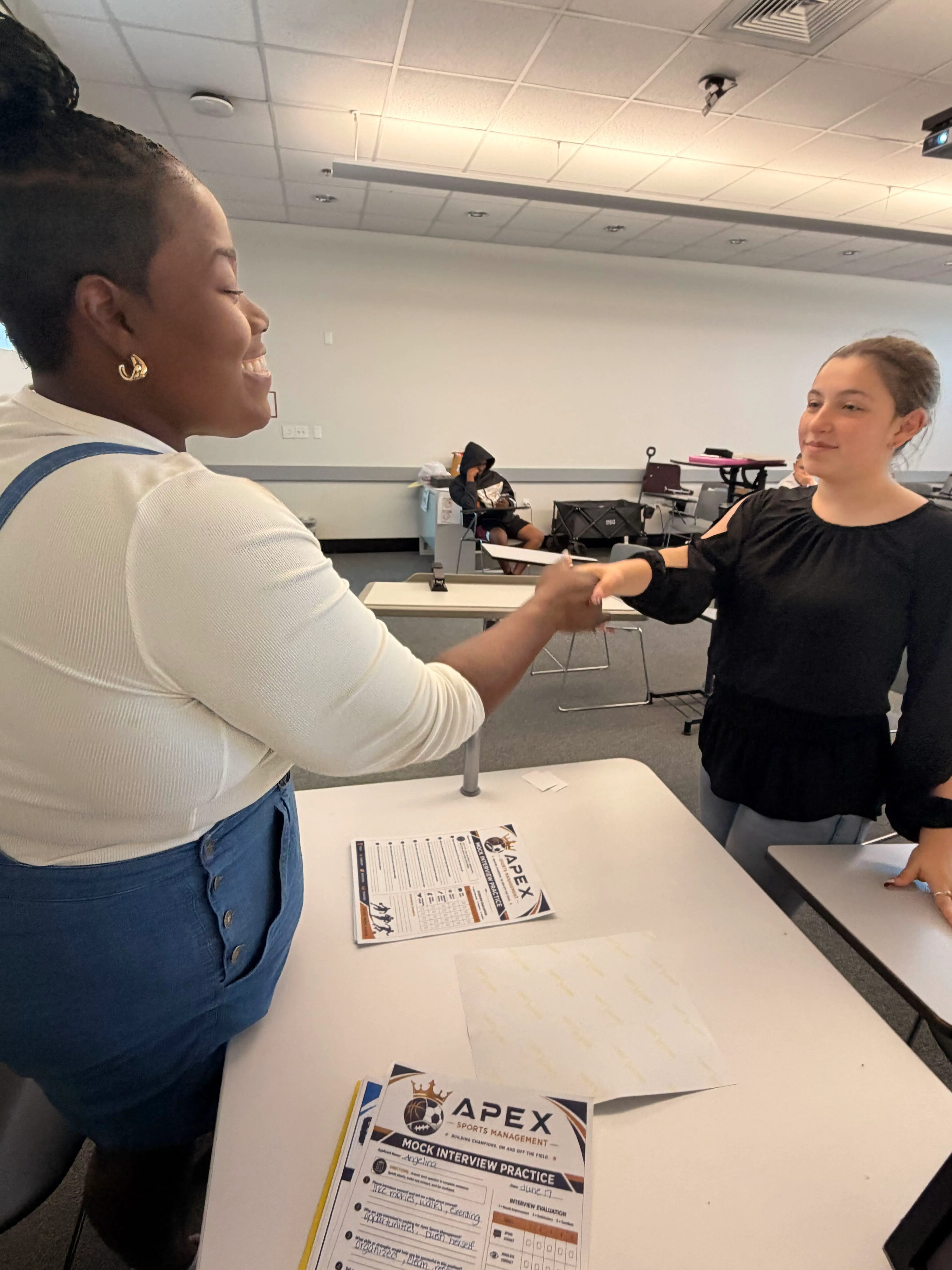
Do mock interviews— Have practice interviews with someone who gives honest feedback. This prepares you for the real thing.
Research the company thoroughly— Know their mission, values, recent news, culture. Knowledge builds confidence.
Prepare specific examples— Have 3-5 concrete examples of accomplishments or challenges you've overcome ready to share. Specific examples reduce the need to improvise.
Physical preparation matters— Eat well, sleep well, exercise. Your body affects your confidence.
Manage negative self-talk— Notice anxious thoughts ("They won't hire me because of my disability") and counter them with evidence ("I'm qualified, I've demonstrated capability, and many employers hire people with disabilities").
During the Interview:
Ground yourself— Take deep breaths. Feel your feet on the floor. This activates your nervous system's calm response.
Speak deliberately— Anxiety makes people speak fast. Slower speech makes you appear more confident and gives you time to think.
Pause before answering— You don't have to answer immediately. "That's a great question. Let me think for a moment..." is perfectly acceptable and professional.
Focus on connection— Remember this is a conversation, not an interrogation. You're assessing them as much as they're assessing you.
Remember your value— You wouldn't be interviewing if they didn't see potential. Trust that.
Use accommodations without apology—if you requested them, use them. They're there to help you succeed.
Understanding Your Rights: ADA Protections
Know your legal rights. This knowledge gives you confidence and protection.
What's Legal for Employers to Ask:
Questions about your ability to do the job
Questions about your work history and qualifications
How you would approach specific job tasks
Requests for documentation of disability IF you're requesting accommodations
What's ILLEGAL for Employers to Ask:
What's your diagnosis?
What medications do you take?
How did you get your disability?
Details about your medical condition
Questions about your mental health history
Whether you have genetic traits for disability
Whether you could become severely ill
Your Rights Under the ADA:
Right to reasonable accommodations
Right to equal opportunity in hiring
Protection from discrimination based on disability
Right to privacy about your disability
Right to request accommodations without retaliation
If Discrimination Occurs:
Document what happened (date, time, exactly what was said)
Report to HR or the hiring manager
File a complaint with the EEOC (eeoc.gov)
Contact the Job Accommodation Network (JAN) for guidance
Consult an employment attorney if needed
Red Flags: When to Be Cautious
Green flags (disability-friendly):
They ask about accommodations proactively
They discuss company culture positively
They seem genuinely interested in your perspective
They ask thoughtful questions about your capabilities
Red flags (potential discrimination):
Questions about your medical history (illegal)
Assumptions about what you can't do
Focus on your disability rather than qualifications
Dismissive responses to accommodation requests
Comments suggesting people with disabilities "aren't right for this role"
Interview Preparation Checklist
Two Weeks Before:
Identify which positions to apply for
Research companies thoroughly
Contact Better Steps for interview coaching if interested
One Week Before:
Apply for positions
Begin interview coaching or preparation
Practice your disclosure statement with someone
Three Days Before:
Continue mock interviews with feedback
Refine your examples and stories
Prepare 5-7 questions to ask the employer
Confirm interview details and location
Day Before:
Research current company news
Review the job description
Prepare professional outfit
Plan transportation (confirm accessible route if needed)
Get good sleep
Day Of:
Eat a good breakfast
Review your key examples one more time
Arrive 10 minutes early
Take deep breaths
Remember: You're qualified
After the Interview
Send a thank-you email within 24 hours
If you don't get the job, request feedback about the interview
If you get the job, confirm any accommodations discussed in writing before your start date
Contact Better Steps for job coaching during your first weeks (critical for success)
How Better Steps Supports Interview Preparation and Success
Better Steps helps job seekers with disabilities throughout the interview process:
Interview Coaching
Practice interviews with professional feedback
Develop and refine your disclosure language
Discuss specific accommodation requests
Address interview anxiety
Build confidence through practice
Mock Interviews
Realistic practice in a safe environment
Honest feedback on your presentation
Practice handling difficult questions
Refine body language and communication
Self-Advocacy Training
Understand your legal rights under ADA
Practice requesting accommodations assertively
Develop professional communication skills
Build confidence speaking up
Job Coaching (After Hiring)
Ongoing support during first weeks of employment
Help navigating workplace relationships
Problem-solving on the job
Ensuring successful transition from interview to employment
We've worked with job seekers across the disability spectrum—students with autism, ADHD, learning disabilities, physical disabilities, mental health conditions, and more. We understand the specific challenges you face, and we know what strategies work.
Your Action Plan
Week 1:Identify 3-5 jobs to apply for, research the companies, contact Better Steps if you want interview coaching
Week 2:Apply for positions, begin interview preparation, practice your disclosure statement
Week 3:Continue mock interviews, refine your examples, prepare questions to ask
Week 4:Attend interviews, use the strategies from this guide, debrief with your coach after interviews
Week 5+:Follow up on positions, evaluate any job offers, begin job coaching if you're hired
The Bottom Line
Your disability doesn't disqualify you from jobs. Strategic, honest disclosure—combined with demonstrated capability and unshakeable confidence—leads to employment success.
You're qualified. You have skills employers value. You understand your disability and how to work with it. You know your rights and what to say.
Go into that interview with confidence. You're not asking for a favor. You're offering your skills, experience, and commitment to doing excellent work.
Better Steps is here to support you every step of the way—from interview preparation to job coaching after you're hired.
Your first job interview with disability isn't something to fear. It's an opportunity to show an employer what you can do.
Make it count.


